
Understanding the Biodiversity Net Gain (BNG) Metric
The BNG metric is the standardised tool used to calculate biodiversity units for developments in England.
Introduced by DEFRA and mandated under the Environment Act 2021, it quantifies ecological value before and after a project to ensure measurable Biodiversity Net Gain. Using Biodiversity Metric 4.0 and the Small Sites Metric (SSM), developers, planners, and ecologists can assess habitat condition, distinctiveness, and strategic significance. ACP Consultants apply the statutory biodiversity metric to provide accurate, compliant, and auditable results for planning applications. This guide explains how the BNG metric works, how it is applied, and how to calculate your biodiversity units correctly.
- Our Biodiversity Net Gain (BNG) Services in England:
- BNG baseline habitat surveys (Metric 4.0 compliant)
- Biodiversity unit calculations & deficit analysis
- Habitat creation, enhancement & on-site mitigation design
- Biodiversity Gain Plans (BGP) for planning submission
- Off-site BNG strategy & unit sourcing advice
- Habitat Management & Monitoring Plans (HMMP)
- Pre-application BNG feasibility & risk reviews
- Planning condition discharge & post-consent support
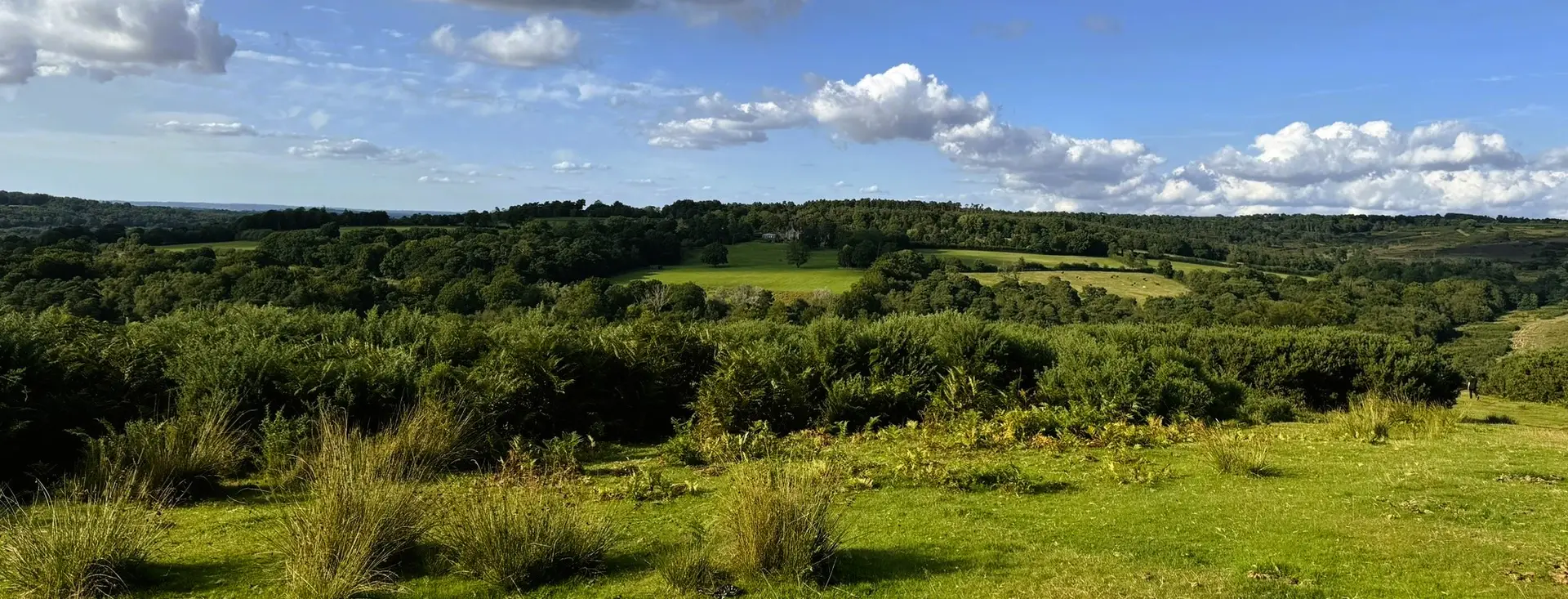
We follow a simple, transparent process to ensure your project runs smoothly from the very first contact to the final report. Our approach is designed to provide you with clarity at every step, so you’re fully informed and confident in moving forward.
01
Step 1: Request a Quote
Fill out our quick quote form or call us, and our team will provide a free, no-obligation quote, outlining the services tailored to your needs.
02
Step 2: Confirm Your Booking
Once you approve the quote, simply return the booking form. We’ll schedule your survey and ensure all the details are taken care of.
03
Step 3: Receive Your Report
After your survey is completed and payment is received, we’ll promptly issue your survey report, ensuring you get the results as quickly as possible.
In the past year, we’ve delivered over 750+ audit-ready reports supporting 400+ projects for developers, planners, and architects nationwide. We put quality over quantity and build lasting relationships based on trust, ensuring your planning applications are backed by robust evidence and delivered on time.
What Is the BNG Metric and Why It Matters
The BNG metric, formally known as the Statutory Biodiversity Metric, is the government-approved tool used to measure biodiversity value in development projects across England. Developed by DEFRA and Natural England, and mandated under the Environment Act 2021, the Biodiversity Metric 4.0 translates complex ecological data into a standardised unit of measurement known as biodiversity units. These units combine habitat area, distinctiveness, condition, and strategic significance into a single, comparable value, allowing baseline and post-development biodiversity to be assessed consistently.
The importance of the BNG metric lies in its role as both a regulatory and decision-making tool. Local planning authorities rely on biodiversity metric calculations to determine whether a development achieves the mandatory minimum 10% Biodiversity Net Gain. Without a compliant metric submission, planning applications are unlikely to meet validation requirements. Beyond compliance, the metric supports better design by encouraging developers to avoid ecological harm, enhance habitats, and integrate green infrastructure from the outset.
In practice, the statutory biodiversity metric embeds the mitigation hierarchy into quantifiable outputs, ensuring that biodiversity losses are minimised and compensated appropriately. It also provides transparency, allowing stakeholders to understand how ecological value is measured and improved. As a result, the BNG metric is central to delivering measurable, policy-compliant biodiversity outcomes and plays a key role in achieving wider environmental objectives such as ecosystem resilience, natural capital enhancement, and sustainable land use.
The Legal and Policy Framework
The Environment Act 2021 made Biodiversity Net Gain a legal requirement for most planning permissions in England. From February 2024, all major and small sites must demonstrate at least a 10% improvement in biodiversity value, measured using the Statutory Biodiversity Metric.
The metric was developed by DEFRA and Natural England to standardise biodiversity accounting, supported by guidance documents such as the Biodiversity Metric 4.0 User Guide (JP058) and Small Sites Metric User Guide 2024. These replace earlier, non-statutory versions (Metrics 2.0, 3.0, and 3.1).
The Statutory BNG Metric must be applied in all baseline and post-development assessments, ensuring consistent, evidence-based calculations for planning validation. It aligns with CIEEM Technical Guidance and integrates with the DEFRA Biodiversity Gain Plan template.
In summary, the BNG metric is both a legal and procedural tool that sits at the heart of England’s planning framework for environmental enhancement.
Inputs and Outputs of the Metric
The Biodiversity Metric 4.0 operates as a structured biodiversity accounting system, converting ecological survey data into measurable biodiversity units. At its core, the BNG metric relies on a series of defined inputs that describe the ecological characteristics of a site, which are then processed through the DEFRA biodiversity calculator to generate outputs that quantify biodiversity value.
Key inputs include habitat type, habitat area (measured in hectares or linear units), habitat condition, and strategic significance. These variables are recorded through baseline ecological surveys using UKHab classification and Natural England condition assessment criteria. The statutory biodiversity metric then applies distinctiveness scores and condition multipliers to calculate the number of biodiversity units present on-site prior to development.
Outputs are expressed as biodiversity units, representing the ecological value of both baseline and post-development habitats. By comparing these values, the metric determines whether a scheme results in a net loss or gain of biodiversity. The inclusion of risk multipliers, such as temporal risk (time to reach target condition) and spatial risk (location of habitat delivery), ensures that outputs reflect realistic ecological outcomes.
The BNG metric output is therefore not just a numerical result but a decision-making tool. It informs design changes, habitat creation strategies, and potential off-site compensation requirements. By standardising inputs and outputs, Biodiversity Metric 4.0 ensures consistency, transparency, and auditability across all BNG assessments, supporting robust planning decisions and regulatory compliance.
Habitat Type and Distinctiveness
Within the BNG metric, habitat type and distinctiveness are fundamental components that determine the baseline ecological value of a site. Each habitat is classified using the UKHab system, ensuring consistency with national standards and enabling accurate comparison across projects. Once identified, habitats are assigned a distinctiveness score, which reflects their relative ecological importance and rarity.
Distinctiveness categories typically range from low-value habitats, such as amenity grassland or heavily modified environments, to high or very high-value habitats, including ancient woodland, species-rich grassland, and priority habitats identified under UK biodiversity frameworks. The higher the distinctiveness score, the greater the number of biodiversity units generated per unit area. As a result, impacts on high-distinctiveness habitats carry greater weight within the statutory biodiversity metric and are more difficult to offset.
The DEFRA Biodiversity Metric 4.0 User Guide provides detailed criteria for assigning distinctiveness, ensuring that assessments are evidence-based and consistent. This is critical for avoiding subjective interpretation and ensuring that biodiversity metric calculations are robust and defensible. In practice, accurate habitat classification and distinctiveness scoring require experienced ecological input, particularly on complex or mixed-habitat sites.
Understanding habitat type and distinctiveness is essential for both baseline assessment and scheme design. It helps identify areas of high ecological value that should be retained or enhanced, while also informing opportunities for habitat creation. By correctly applying these principles within the BNG metric, developers and consultants can ensure that biodiversity units are calculated accurately and that the resulting Biodiversity Net Gain is meaningful and policy compliant.
Condition and Strategic Significance
Habitat condition and strategic significance are key modifiers within the Biodiversity Metric 4.0 that refine how biodiversity units are calculated. While habitat type and distinctiveness establish baseline ecological value, condition assessments determine the quality of each habitat, and strategic significance reflects its importance within the wider landscape context.
Condition is assessed using standardised criteria set out in the DEFRA BNG user guide and Natural England condition assessment sheets. Habitats are typically scored as poor, moderate, or good based on measurable indicators such as vegetation structure, species diversity, management practices, and ecological functionality. These scores are then applied as multipliers within the statutory biodiversity metric, meaning that higher-quality habitats generate more biodiversity units than degraded ones.
Strategic significance provides an additional layer of weighting by recognising habitats located within locally identified biodiversity priority areas. These areas are often defined by local planning authorities through Local Nature Recovery Strategies (LNRS) or biodiversity opportunity maps. Habitats within these zones may receive higher unit values, reflecting their contribution to wider ecological networks and landscape-scale conservation objectives.
Together, condition and strategic significance ensure that the BNG metric captures not only the quantity but also the quality and context of biodiversity. This approach encourages developers to enhance habitat condition and align proposals with local ecological priorities. By accurately applying these factors, Biodiversity Metric 4.0 supports more meaningful biodiversity outcomes and strengthens the ecological credibility of BNG assessments submitted for planning approval.
The Output: Biodiversity Units
The primary output of the BNG metric is biodiversity units, which provide a quantifiable measure of ecological value before and after development. These units are calculated by combining habitat area, distinctiveness, condition, and strategic significance within the DEFRA Biodiversity Metric 4.0 calculator. The resulting figure represents the baseline biodiversity value of a site and forms the benchmark against which post-development outcomes are assessed.
Post-development biodiversity units are calculated by inputting proposed habitat creation, enhancement, or retention measures into the metric. The statutory biodiversity metric applies additional risk multipliers to these values, including temporal risk (reflecting the time required for habitats to reach target condition) and difficulty multipliers (reflecting the complexity of habitat creation). This ensures that projected biodiversity gains are realistic and achievable.
To comply with the Environment Act 2021, developments must demonstrate a minimum 10% net increase in biodiversity units compared to the baseline. If on-site measures are insufficient to achieve this target, developers may need to secure off-site biodiversity units or purchase statutory biodiversity credits.
Biodiversity units therefore serve as both a compliance metric and a design tool. They allow developers, ecologists, and planning authorities to quantify ecological impacts, test alternative design scenarios, and ensure that biodiversity gains are delivered in a measurable and transparent way. As the core output of the BNG metric, they underpin all statutory Biodiversity Net Gain assessments and planning submissions.
BNG Metric 4.0 — Main Updates
Changes from Metric 3.1 to 4.0
The latest Biodiversity Metric 4.0 introduced several refinements to improve accuracy and policy alignment:
- Updated habitat condition criteria with clearer scoring thresholds.
- Revised area, linear, and river modules to align with the statutory tool.
- Expanded urban habitat classifications under UKHab 2.0.
- Integrated climate resilience considerations in habitat creation and enhancement.
- Enhanced transparency in biodiversity calculator outputs, making auditing easier.
The 4.0 version also standardised the link between habitat management plans (HMMPs) and monitoring requirements, improving post-development accountability.
Implications for Planning Applications
Metric 4.0 forms the foundation of the Statutory Biodiversity Metric (SBM). As of February 2024, LPAs will only accept submissions that use this statutory version. Projects still using Metric 3.1 must now transition to 4.0 or its simplified counterpart, the Small Sites Metric (SSM).
This shift ensures all developments operate under one national framework for biodiversity quantification, giving both LPAs and developers a consistent reference point for compliance, auditing, and offsetting.
Small Sites Metric (SSM)
The Small Sites Metric (SSM) is a simplified version of the Biodiversity Metric 4.0, designed specifically for smaller developments with limited ecological complexity. It follows the same underlying principles as the statutory biodiversity metric but reduces data requirements and simplifies the calculation process, making it more accessible for minor residential and commercial schemes.
The SSM uses a streamlined set of habitat categories and simplified condition assessment criteria, while still generating biodiversity units that are consistent with the main BNG metric framework. It is typically applicable to developments under one hectare or schemes involving fewer than ten dwellings, provided that the site does not contain priority habitats and is not subject to Environmental Impact Assessment (EIA) or Habitats Regulations Assessment (HRA).
Despite its simplified format, the Small Sites Metric still requires robust baseline data and accurate habitat classification using UKHab standards. It also maintains the requirement to achieve at least 10% Biodiversity Net Gain, ensuring that smaller developments contribute to national biodiversity objectives.
For developers, the SSM offers a proportionate approach to compliance, reducing time and cost while maintaining regulatory alignment. For planning authorities, it ensures consistency in how biodiversity units are calculated across different scales of development. When applied correctly, the Small Sites Metric provides an efficient and compliant pathway to meeting BNG requirements without compromising ecological integrity.
Get Clear, Defensible BNG Metric Calculations
We apply the Biodiversity Net Gain Metric accurately and consistently helping you understand habitat distinctiveness, condition scoring, trading rules and risk multipliers before they affect your planning outcome.
Applying the Metric in Practice
Applying the Biodiversity Metric 4.0 in practice requires a structured and evidence-based approach that combines field survey data, technical guidance, and careful interpretation of the statutory biodiversity metric. The process begins with a detailed baseline habitat survey, typically undertaken using UKHab classification. Ecologists record habitat types, map their spatial extent, and assess condition using Natural England’s standardised criteria. This data forms the foundation of the BNG metric calculation, ensuring that baseline biodiversity units are accurate and defensible.
Once baseline data is established, the information is entered into the DEFRA biodiversity metric calculator. The statutory biodiversity metric then converts these inputs into biodiversity units, reflecting the ecological value of the site prior to development. Post-development proposals are subsequently modelled within the same framework, incorporating habitat retention, creation, and enhancement measures. Risk multipliers—such as temporal risk (time to reach target condition) and difficulty of habitat creation—are applied to ensure that predicted gains are realistic.
In practice, applying the BNG metric also involves iterative design testing. Developers and ecologists often adjust layout, landscaping, and habitat strategies to achieve the required minimum 10% Biodiversity Net Gain. Where on-site delivery is constrained, off-site biodiversity units or statutory credits may be considered.
Quality assurance is critical throughout this process. Common issues such as incorrect UKHab classification, over-optimistic condition scoring, or incomplete mapping can undermine compliance. A robust workflow—including peer review, alignment with the DEFRA BNG user guide, and clear documentation—ensures that the final biodiversity metric submission is transparent, auditable, and acceptable to local planning authorities.
Common Errors and Quality Assurance Checks
Typical mistakes include:
- Misclassification of UKHab codes.
- Over-optimistic condition scoring.
- Incomplete baseline mapping.
- Ignoring off-site habitat delivery or long-term management.
To mitigate these, ACP follows a structured QA process: peer review, consistency checks, and cross-validation with DEFRA’s Biodiversity Metric 4.0 User Guide. Each submission is accompanied by a Habitat Management and Monitoring Plan (HMMP) and a clear audit trail of assumptions.
By combining ecological expertise with analytical precision, ACP Consultants ensure every BNG metric assessment stands up to scrutiny from LPAs and statutory consultees.
ACP’s Process for BNG Metric Calculations
ACP Consultants deliver fully compliant BNG metric assessments across England, supporting planning applications from concept to post-approval monitoring.
Our process includes:
- Initial Review – Analyse drawings, site boundaries, and constraints to confirm whether SBM or SSM applies.
- Baseline Assessment – Undertake UKHab habitat mapping and condition assessment following CIEEM guidance.
- Metric Calculation – Input data into the DEFRA BNG metric calculator and verify results through internal QA.
- Scenario Testing – Explore design and landscaping options to achieve ≥10% gain.
- Reporting and Submission – Prepare a BNG Assessment Report including the metric outputs, methodology, and compliance summary.
- Follow-Up Monitoring – Provide ongoing support and Habitat Management and Monitoring Plans (HMMPs) to ensure delivery of promised gains.
Our experience across residential, commercial, and infrastructure projects allows us to produce statutory biodiversity metric reports that satisfy LPAs quickly and cost-effectively.
Why Choose ACP Consultants for Your BNG Metric Assessment
ACP Consultants are recognised specialists in Biodiversity Net Gain, providing end-to-end consultancy for metric calculations, reporting, and compliance. Our ecologists combine scientific rigour with planning expertise to deliver precise and defensible assessments.
We work directly with developers, planners, and architects to integrate BNG metric results into site layouts, ensuring early design decisions align with statutory biodiversity metric requirements.
Our advantages include:
- Direct experience with DEFRA Metric 4.0 and Small Sites Metric (SSM).
- Fast turnaround and peer-reviewed outputs.
- Integrated Habitat Management Plans (HMMPs) and offset advice.
- Transparent reporting aligned with CIEEM Technical Guidance and Natural England JP058.
Whether you need a BNG metric calculator run, technical review, or complete Biodiversity Gain Plan, ACP provides dependable support from start to submission.
References and Useful Resources
- Defra & Natural England – Biodiversity Metric: Calculate the biodiversity net gain of a project or development
- Lichfield District Council – Biodiversity Net Gain (BNG) Guidance for Planning Applications
- East Devon District Council – How is Biodiversity Net Gain Measured?
- Defra (July 2025) – The Statutory Biodiversity Metric: User Guide
- North Hertfordshire District Council – How to Measure Biodiversity Net Gain
- Chartered Institute of Ecology and Environmental Management (CIEEM) – Biodiversity Net Gain Case Studies & Good Practice
- CIEEM – Biodiversity Net Gain Report and Audit Templates
- UK Statutory Instruments – The Biodiversity Gain Requirements (Exemptions) Regulations 2024
- Natural England – Habitat Management and Monitoring Plan (HMMP) Template (JP058)
- Defra – Biodiversity Gain Plan: Template and Guidance
- Defra – Guidance: Understanding Biodiversity Net Gain
- Natural England – Biodiversity Net Gain: Where to Start
Our Core Values – Built on TRUST
Frequently Asked Questions
Below are frequently asked questions about the BNG metric, Biodiversity Metric 4.0, and Small Sites Metric, based on DEFRA and Natural England guidance. These cover eligibility, calculation methods, and common challenges developers face during planning.
What is the BNG metric?
The BNG metric is a DEFRA-developed calculation tool that quantifies biodiversity value in measurable units. It is used to assess ecological changes caused by development and to confirm compliance with the mandatory 10% net gain target.
Who developed the statutory biodiversity metric?
It was created by DEFRA and Natural England, with technical input from CIEEM, Atkins, and other ecological specialists.
What’s the difference between Metric 4.0 and the Small Sites Metric (SSM)?
Metric 4.0 is the full Statutory Biodiversity Metric (SBM) designed for complex or large-scale projects. The SSM is a simplified version for smaller developments, reducing data complexity but maintaining consistency.
When should I use each metric?
Use SBM 4.0 for major or ecologically complex projects, and SSM for small residential schemes under 1 hectare that meet Natural England’s small site criteria.
How do you calculate biodiversity units?
Units are derived from habitat area, distinctiveness, condition, and strategic importance. The DEFRA metric calculator automatically combines these factors to give baseline and post-development scores.
Can LPAs challenge or reject a metric submission?
Yes. Local planning authorities can request revisions or clarifications if calculations are inconsistent, unsupported, or fail to meet BNG guidance. ACP’s QA system ensures that our reports are fully auditable and defensible.
What happens if my scheme falls short of 10% net gain?
You can redesign the layout to include more habitat creation or provide off-site biodiversity units. ACP helps clients model scenarios and identify cost-effective solutions.
Is the statutory BNG metric free to use?
Yes. The Biodiversity Metric 4.0 and Small Sites Metric tools are freely downloadable from the GOV.UK and Natural England websites as Excel spreadsheets.
Can the metric be integrated with Environmental Impact Assessments (EIA)?
Absolutely. The BNG metric complements Environmental Impact Assessments, ensuring biodiversity considerations are quantified and tracked throughout the planning lifecycle.
How accurate are the predicted gains?
Accuracy depends on robust baseline data and realistic assumptions for habitat creation. ACP’s multi-stage validation process ensures results reflect achievable ecological outcomes.
Where can I download the BNG metric PDF or calculator?
You can download the official BNG metric PDF and Excel calculator tool from the GOV.UK Biodiversity Metric resources. The latest version includes Biodiversity Metric 4.0 and the Small Sites Metric (SSM) spreadsheets, which are freely available for developers and ecologists.
When was the Statutory Biodiversity Metric published?
The Statutory BNG Metric (4.0) was formally published by DEFRA and Natural England in November 2023, becoming legally enforceable in February 2024 under the Environment Act 2021. This replaced earlier non-statutory metrics (3.0 and 3.1) used for voluntary assessments.
Can you provide a BNG metric example?
Yes. For instance, a 1-hectare grassland site assessed using Biodiversity Metric 4.0 might score 4.2 baseline habitat units. After habitat creation and enhancement, it could deliver 4.8 units, representing a 14% net gain. This calculation is demonstrated using the BNG metric calculator tool.
How does the BNG metric link to biodiversity offsetting?
The BNG metric quantifies residual biodiversity losses after mitigation. If on-site enhancements cannot achieve a 10% gain, developers can secure biodiversity offsetting through registered off-site units or credits. This ensures all developments meet the statutory BNG target even where space is limited.
What role does the metric play in biodiversity enhancement?
Beyond compliance, the BNG metric guides projects to maximise biodiversity enhancement and long-term habitat management. By applying the tool early in design, developers can integrate nature-based solutions and green infrastructure into landscape layouts.
How is the BNG metric linked to wildlife impact assessments?
A wildlife impact assessment focuses on protected species, while the BNG metric measures habitats more broadly. Together, they form part of a comprehensive ecological assessment framework for planning and environmental impact assessment (EIA) compliance.
Is the BNG metric part of DEFRA’s wider conservation metrics approach?
Yes. The BNG metric sits within DEFRA’s family of conservation and ecological metrics, which support natural capital accounting and ecosystem services valuation across land-use planning and environmental management.
How does the BNG metric assess habitat condition?
Under BNG Metric 4.0, condition assessments follow DEFRA’s updated criteria (JP058), rating habitats from “poor” to “good.” These scores are essential inputs for calculating biodiversity units and verifying condition assessment compliance.
How does ACP ensure accuracy in BNG metric condition assessments?
ACP’s ecologists perform detailed BNG condition assessments aligned with Biodiversity Metric 4.0 guidance, ensuring consistent results. Peer review and field validation help maintain data integrity across all statutory biodiversity metric submissions.
What guidance should I follow for the statutory BNG metric?
Always use the latest BNG guidance from DEFRA and Natural England, including the Biodiversity Metric 4.0 User Guide and Small Sites Metric User Guide 2024. ACP Consultants reference these documents for all BNG metric calculations and Habitat Management Plans (HMMPs).
Testimonials
Trusted by Clients Across the UK – Consistently Rated 5-Stars for Professionalism and Expertise

 Denise Skinner
Trustindex verifies that the original source of the review is Google.
Excellent Pump House Designs Battle OfficeVery efficient and professional service provided on one of our local projects
 James LukerI found ACP to be both cost effective and and very professional in the emergence survey that they recently undertook for me. I would highly recommend their services
 Danai TsiouriI recently worked with ACP Consultants for a bat emergence survey and was thoroughly impressed with their service. They were highly responsive, efficient, and delivered the work quickly without compromising on quality. The team was professional throughout and clearly knowledgeable in their field. Beyond bat surveys, they offer a wide range of ecological and other consultancy services, and I’m looking forward to working with them again in the future. Highly recommended!
 Manahil KhanACP has been great to work with—efficient, friendly, and professional. Megan was especially helpful and made sure we met all our requirements smoothly. Really appreciated the support!
 Zayn SaleemiWe recently used ACP for an air quality assessment and were extremely impressed with the service. Megan was professional, knowledgeable, and incredibly helpful throughout the entire process. She made everything straightforward and was always on hand to answer any questions we had. The report was thorough and delivered promptly. Highly recommended – would definitely work with them again.
 Katie CDavid and Megan from ACP were so helpful in assisting us with a PEA. We needed an ecological report to submit to the council and they are also helping us with a PRA. They have been so quick with everything and helped us understand it all.
 Paul HuntI was asked by the council to provide a biodiversity net gain assessment to support my planning application for a small extension to my house. ACP helped provide a statement to explain that the development was below the threshold and therefore exempt, saving me time and money! Highly recommend.
 Kayleigh DixonACP provided an air quality assessment to support my planning application. They were extremely helpful and managed to undertake it with a short turn around in order to meet a tight deadline with the council!
 Keith SpouncerI had a PEA done earlier this year. Fast delivery and easy to work with. I would definitely recommend!
Need BNG Metric Results That Stand Up to Planning Scrutiny?
From baseline habitat surveys and Defra Metric 4.0 calculations to Biodiversity Gain Plans and long-term delivery, our ecologists provide BNG metric outputs that meet local authority validation and post-consent requirements.
- Last Updated:
- October 2026
Disclaimer: Our content is prepared by ACP Consultants’ in-house specialists and is based on current guidance, standards, and best practice in environmental consultancy. While we make every effort to keep information accurate and up to date, it is provided for general guidance only and should not be relied upon as a substitute for professional advice on specific projects. Planning authorities retain final decision-making powers, and requirements may vary between local authorities and over time. ACP Consultants accepts no liability for any loss arising from reliance on this content without obtaining tailored advice for your project.