ACP Consultants / Protected Species Surveys

Great Crested Newt
Surveys for Planning

Great crested newts, their breeding sites and resting places are legally protected. Where development could affect ponds or suitable surrounding habitat, ecological evidence may be necessary.

Early advice helps identify the appropriate survey or licensing route, before seasonal constraints affect your programme.

Planning and development in England.

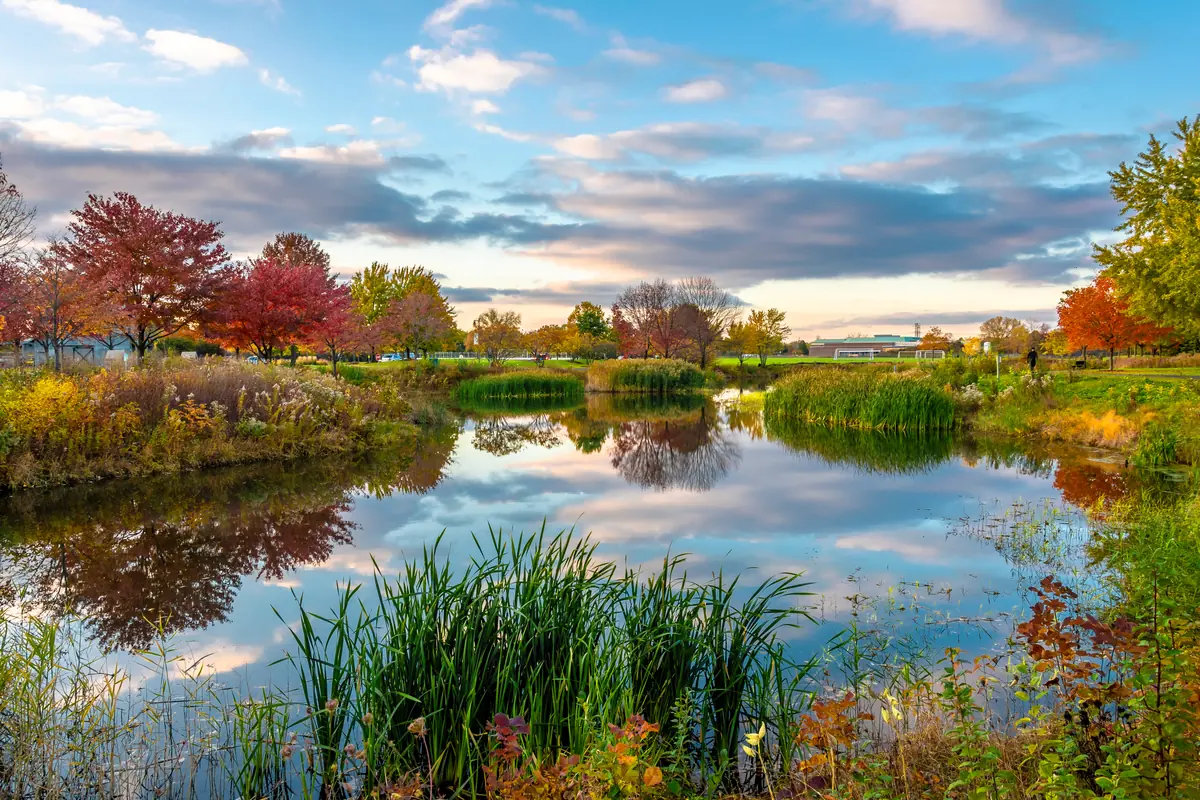
A landscaped pond with reeds, planted margins and surrounding trees
Ponds and the land around them need to be considered together. Illustrative library photograph; species presence is not established.
Start with the site Ponds, habitats, records and proposed works.
Choose the evidence HSI, eDNA and field surveys answer different questions.
Plan the route Check season, licensing and project milestones.
01 / Site context

When is a great crested newt survey required?

The need for a survey depends on the development, suitable habitat, existing records and potential effects.

Natural England's standing advice identifies circumstances where surveys may be necessary, particularly where suitable ponds, ditches or connected terrestrial habitats occur near a proposed development.

Waterbodies within 250 metres are often the initial survey focus. However, the assessment may need to consider habitats and waterbodies up to 500 metres away where dispersal conditions justify this.

A lack of existing newt records does not prove absence.

A suitable district level licensing scheme may offer an alternative to individual great crested newt surveys for an eligible development.

The correct approach requires a review of the actual site and planning context.

A route through the decisions

Resolve the route before commissioning fieldwork.

Early screening can identify whether district level licensing or a site-specific evidence route deserves further investigation.

  1. 01

    Site and proposal

    Define the boundary, works and likely effects.

  2. 02

    Ponds and habitats

    Review waterbodies, records and habitat connections.

  3. 03

    Check DLL availability

    Is a scheme operating, and could this proposal qualify?

  4. 04

    Choose the evidence route

    Agree any HSI, eDNA or conventional survey requirements.

  5. 05

    Plan the next steps

    Align planning evidence, licensing and the works programme.

Site-specific ecological judgement is essential. This sequence is a discussion aid, not an eligibility test. Survey findings or design changes can require earlier decisions to be revisited.

02 / Survey options

Which great crested newt survey do you need?

These methods answer different questions. An HSI assessment describes habitat suitability; eDNA investigates species presence. Neither automatically resolves every impact assessment or licensing requirement.

Five approaches. Different evidence, different decisions.
ApproachWhat it is forWhat it does wellWhat it does not establishWhen it is relevant
01HSIHabitat Suitability IndexAssess a pond’s habitat suitability.A structured appraisal of pond characteristics and suitability.Presence, absence or population size.Early pond appraisal, alongside records and site context.
02eDNAPond-water analysisInvestigate species presence through DNA in water.A protocol-based detection result within the accepted sampling window.Population size or all consequences of development. A negative result is not an unconditional clearance.Where presence evidence is needed and the method is suitable for the purpose.
03Conventional surveysPresence / absenceInvestigate occurrence using suitable field methods.Repeated field observations under an agreed survey programme.A licence to proceed with development, or a population assessment from an incomplete programme.Where the evidence brief requires field surveys, including follow-up to other information.
04Population assessmentSize-class evidenceProvide more detailed population evidence where required.A standardised survey-based size class to inform assessment.An exact census or, on its own, the acceptability of the proposal.Where the impact assessment or licensing route requires this level of evidence.
05DLL reviewStrategic licensingCheck scheme availability, eligibility and requirements.Identifies whether a strategic route could replace individual newt surveys and site-specific mitigation.Eligibility for every site or compliance with duties for other species and habitats.Early in the programme, before committing to a conventional survey and licensing route.

Select the evidence route around the development, rather than simply the quickest available test.

03 / Pond-water evidence

Great crested newt eDNA surveys

Environmental DNA, or eDNA, is genetic material that organisms release into their surroundings.

For great crested newts, ecologists can collect pond-water samples and arrange laboratory analysis to investigate whether the species is present.

Under established Natural England protocols, the commonly accepted eDNA sampling period is 15 April to 30 June.

Sampling must follow an appropriate protocol, and results require professional interpretation.

A positive result indicates that great crested newt DNA has been detected. However, eDNA testing does not provide a population size estimate.

A negative result should also be interpreted in light of sampling conditions, the relevant protocol and the wider ecological evidence.

If the assessment is needed to support a particular licensing application, confirm the applicable sampling, laboratory and surveyor requirements before undertaking work.

04 / Survey programme

Great crested newt survey seasons

Survey timing depends on the method and information required.

Initial desk studies, habitat reviews and some preliminary scoping can take place outside the principal breeding survey season.

However, conventional aquatic surveys and eDNA sampling have seasonal constraints.

A suitable survey programme should consider:

  • The assessment purpose.
  • Number and condition of waterbodies.
  • Pond access arrangements.
  • Relevant survey windows.
  • Weather and seasonal conditions.
  • Laboratory and reporting requirements.
  • Potential further fieldwork.
  • Planning submission deadlines.
Plan the evidence, then the submission

Different activities have different windows.

Indicative England programme. The date ranges below describe survey opportunities, not guaranteed field conditions or completion dates.

Scoping and desk review

Can begin throughout the year

Start early. Review the proposal, records, pond access and route before the field season. Habitat appraisal remains subject to site conditions.

Conventional aquatic surveys

Typically mid-March–mid-June

Agree a survey programme. Method, visit number, weather, water levels and access affect suitability. One visit is not automatically a complete assessment.

eDNA sampling

15 April–30 June

Use the applicable protocol. Confirm sampling, laboratory and surveyor requirements for the evidence or licensing route.

Reporting and planning

Programme around the required evidence

Allow time beyond fieldwork. Laboratory analysis, interpretation, design responses and licensing can affect the submission and construction timetable.

The correct programme depends on the development, evidence purpose and ecological judgement. Missing a survey window can affect later milestones; district level licensing may offer a different route where available and suitable.

Natural England’s indicative survey periods

An initial site assessment and a completed planning-ready newt assessment may be different project milestones.

05 / Licensing routes

District level licensing or traditional survey and licensing?

District level licensing provides an alternative approach for eligible developments in parts of England.

Where a suitable scheme operates and the development qualifies, developers may be able to join that scheme instead of undertaking their own detailed great crested newt surveys and traditional on-site mitigation.

The strategic scheme funds conservation measures through the relevant operator.

However, district level licensing is not appropriate for every proposal. Availability, risk zones, scheme eligibility and site conditions must be considered.

Some proposals may instead need conventional survey evidence, impact assessment, mitigation proposals and a traditional great crested newt mitigation licence.

District level licensing does not remove obligations concerning other protected species and habitats.

Strategic route

Check scheme eligibility first.

District level licensing is not available or appropriate for every development.

For Natural England’s scheme, red risk zones are unsuitable. If ponds fall within the red line boundary, discuss options with the operator early.

Check current district level licensing guidance
Site-specific route

Confirm evidence and authorisations.

Survey licences permit specified survey activities. They do not authorise development impacts. A mitigation licence is a separate matter.

Read protection and licensing guidance

Under the district level licensing route, development must not start before the necessary licence is issued. Other species and habitat obligations still apply.

06 / From brief to evidence

How our newt assessment process works

ACP’s appropriately licensed great crested newt surveyors scope and undertake survey work within the conditions and authorised methods of their licences. We can arrange suitable eDNA sampling and laboratory analysis using the applicable protocols. Share your proposal so we can confirm the assessment scope, survey methods and delivery arrangements before work begins.

01

Review the site

Consider the boundary, nearby ponds, terrestrial habitats, records and proposed works.

02

Establish the route

Consider evidence requirements, seasonal constraints and available licensing options.

03

Agree specialist input

Confirm scope, methods and the appropriate qualified delivery team before commissioning.

04

Identify next steps

Explain evidence limitations and the planning, design or licensing decisions that follow.

Newt held in a gloved hand during night fieldwork beside pond habitat
Illustrative field survey context for newt assessment work.
Fieldwork in context

The method must fit the evidence needed.

Field conditions, access and the purpose of the assessment shape the survey programme. Photographs provide context; the assessment conclusions depend on recorded evidence and professional interpretation.

Any handling or other licensable survey activity must be undertaken with the appropriate authorisation.

07 / Your report

What should a great crested newt assessment report include?

Depending on the agreed scope, relevant reporting may include:

  • Site details and development description.
  • Ecological records and background information.
  • Pond and terrestrial habitat assessment.
  • Methods and survey dates.
  • Results and limitations.
  • Assessment of likely development effects.
  • Further survey recommendations where justified.
  • Avoidance, mitigation and licensing considerations.
  • Implications for design and project timing.

A report should make clear which conclusions are supported by evidence and which matters still require further work.

08 / Scope and fees

Great crested newt survey costs

The price depends on the assessment required.

For example, an initial habitat appraisal differs from an eDNA sampling programme, conventional presence/absence surveys or detailed mitigation and licensing work.

Relevant cost factors include:

  • Number and location of ponds.
  • Accessibility and landowner permissions.
  • Habitat complexity.
  • Survey method and number of visits.
  • Seasonal constraints.
  • Laboratory testing.
  • Reporting and impact assessment requirements.
  • Licensing and mitigation advice.

Agree the deliverables, exclusions and potential additional work before commissioning.

09 / From findings to decisions

What happens if great crested newts are found?

The appropriate response depends on the proposal and the potential effects.

Where possible, the development should avoid harm to newts and important habitat.

This might influence the retention of ponds, surrounding vegetation, access arrangements or the timing of construction.

If harm cannot be avoided, appropriate mitigation, compensation or licensing measures may be necessary.

A species record or positive eDNA result should not be treated as an automatic refusal of planning permission. Equally, planning permission does not remove protected-species legal obligations.

Great crested newt surveys and assessment form part of our Ecology & Biodiversity services.

Protected-species duties and biodiversity net gain requirements have different purposes. Review both where they apply.

A positive result informs the response

Move from evidence to a proportionate plan.

A finding is not automatically the end of a project. It changes the questions the project team needs to resolve.

  1. 01

    Understand the evidence

    Review potential or confirmed presence, the methods used and remaining limitations.

  2. 02

    Consider avoidance

    Explore changes to layout, habitat retention or working methods to avoid harm.

  3. 03

    Assess the effects

    Establish how the proposal could affect newts, breeding sites and resting places.

  4. 04

    Develop the response

    Where necessary, consider suitable mitigation and compensation with specialist advice.

  5. 05

    Confirm the licensing route

    Check the available route, its conditions and required authorisations.

  6. 06

    Align the programme

    Coordinate planning, licensing, seasonal work and construction responsibilities.

This is an iterative pathway, not a permission to start work. Earlier avoidance and design decisions may need revisiting as the evidence develops.

10 / Your questions

Great crested newt survey questions

Practical answers for planning and commissioning in England. The right evidence depends on the actual site and proposed works.

Ask about your project
Do I need a newt survey if there is no pond on my site?

Possibly. Great crested newts also use terrestrial habitats. Ponds and suitable connections beyond the site boundary can be relevant.

Can a newt survey be carried out in winter?

Some initial assessments can take place outside the main survey season. However, particular aquatic and eDNA methods have restricted survey windows.

Does an HSI survey confirm that newts are present?

No. HSI evaluates habitat suitability. It does not establish whether newts are present.

Does a negative eDNA test prove absence?

Not unconditionally. Results should be considered against the relevant sampling protocol, conditions and wider evidence.

How far from a pond can newt surveys be relevant?

Natural England's guidance commonly focuses survey work within 250 metres, with consideration up to 500 metres where circumstances justify it. The appropriate scope is site-specific.

Can district level licensing replace an individual newt survey?

For an eligible development within an applicable scheme, it can remove the requirement to commission individual great crested newt surveys. The scheme's conditions and other ecological duties still apply.

How long is previous newt survey data valid?

For planning decisions, Natural England's standing advice says developer survey information should normally be no older than four survey seasons and should reflect the current site.

For certain district level licensing data submissions, Natural England's guidance permits survey data collected within the preceding five survey seasons.

The appropriate rule depends on what the evidence is being used for.

Can great crested newts delay a planning application?

They can affect the programme if necessary information is missing or seasonal survey opportunities have been missed. Early scoping helps identify the relevant timetable.