
ACP Insights & Guidance
Clearer thinking.
Better environmental decisions.
Environmental planning guidance for the decisions behind your project. Explore ACP’s practical checklists, policy updates and questions to ask before commissioning an assessment.
Featured insight · Biodiversity
When the habitat plan and metric disagree
A practical checklist for tracing discrepancies, coordinating the right document versions and agreeing the next step with your project team.
Read the reconciliation checklist →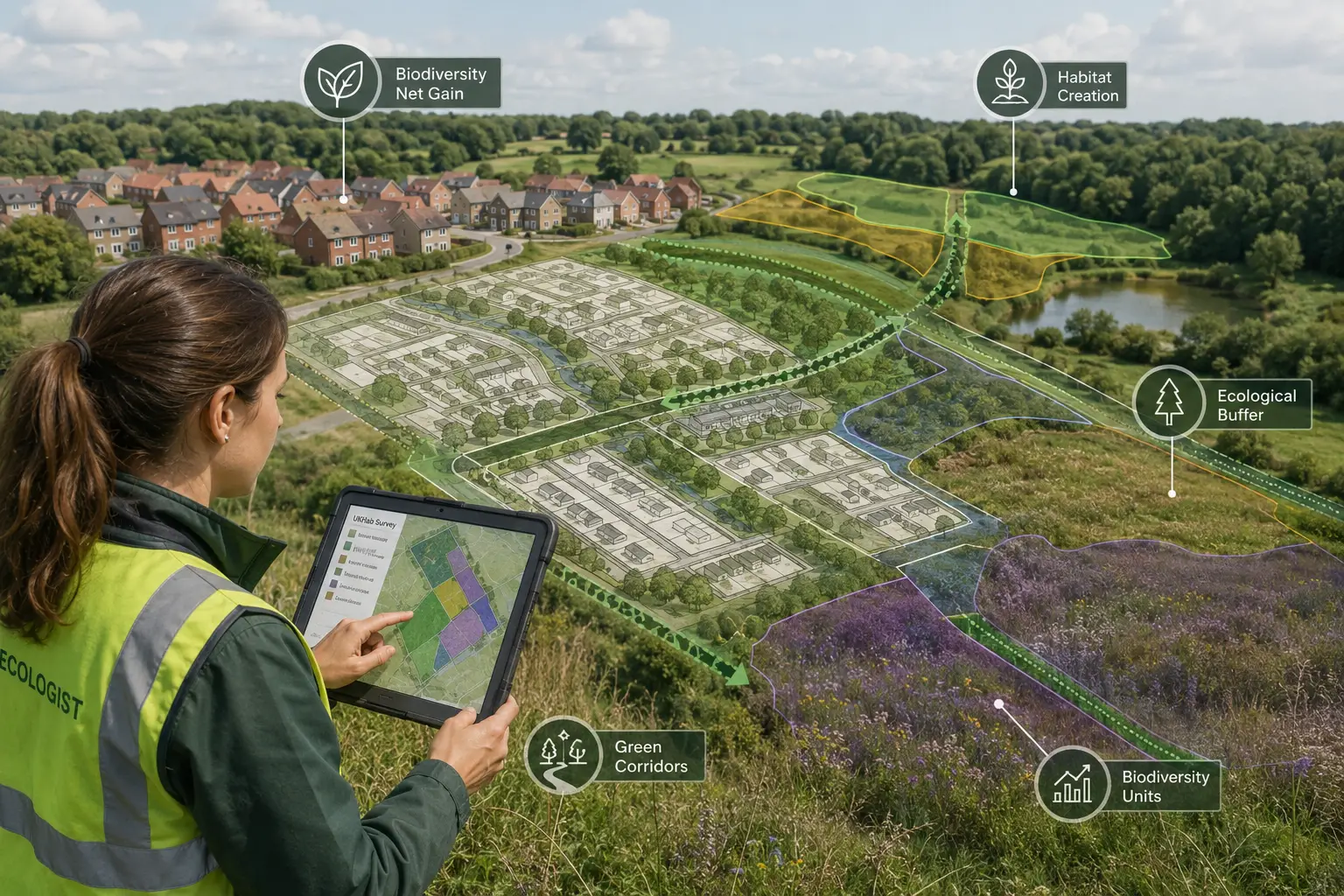
Explore the knowledge library
Explore environmental planning guidance on biodiversity, ecology, air quality, noise, land and development. Each article helps you identify useful questions and the next step for your site.
Browse the published guidance below.
PM2.5 planning assessment in England
ACP insights & guidance A PM2.5 planning assessment starts with the site layout and the activities that the proposal will introduce. In England, National Planning Policy
Spatial development strategy regulations from 26 November 2026
ACP insights & guidance The Strategic Planning Authorities (Spatial Development Strategy) Regulations 2026 come into force on 26 November 2026. They apply in relation to England
Housing climate resilience and who is most exposed to heat and cold
ACP insights & guidance Housing climate resilience depends on the people who use the building as well as its physical design. Two residents in similar homes
What catchment modelling tells us about nature-based solutions and water quality
ACP insights & guidance Environment Agency research published on 9 November 2026 modelled how three nature-based measures might affect agricultural nutrient pollution. It considered the Eden
Transport infrastructure fees from 20 November 2026
ACP insights & guidance The Transport Infrastructure (Fees) Regulations 2026 come into force on 20 November 2026. They give specified public authorities discretion to recover costs
Construction permitting exemptions open for consultation in England
ACP insights & guidance The Environment Agency is consulting on seven proposed environmental permitting exemptions for construction-related activities in England. It opened the consultation on 4
Energy Independence Bill: proposals relevant to development teams
ACP insights & guidance The Energy Independence Bill was introduced in the House of Commons on 4 November 2026. It proposes measures across energy regulation, including
Housing development and health evidence before design freeze
ACP insights & guidance A housing proposal can affect health through its design, location and relationship with the surrounding area. Early health evidence helps the team
Environmental evidence for officer-led planning decisions
ACP insights & guidance England’s National Scheme of Delegation commenced on 31 October 2026. It sets the framework for which planning functions officers or committees can
Ancient woodland at the housing edge: planning access and stewardship
ACP insights & guidance When housing is proposed next to ancient woodland, the layout can influence how people enter and use the woodland. The Forestry Commission’s
PFAS and land acquisition: questions prompted by the government plan
ACP insights & guidance When buying land, a potential PFAS issue starts with the site history and the proposed use. The UK Government’s PFAS Plan sets
Onshore wind noise assessment under the final 2026 guidance
ACP insights & guidance The final UK guidance on assessing onshore wind turbine noise was published on 19 June 2026. It replaces ETSU-R-97 as the government’s
BNG metric update, 3 November 2026: what project teams should check
The 3 November BNG metric update adds workbook capacity and clarifies watercourse catchments. Check what matters for your next assessment issue.
DESNZ Post-Consent Unit: preparing environmental evidence for DCO requirements
ACP insights & guidance The DESNZ Post-Consent Unit creates a new coordination question for nuclear and electricity transmission projects: how will the team demonstrate that each
Natural flood management or SuDS? Scope, evidence and maintenance
ACP insights & guidance Natural flood management and sustainable drainage systems can support the same project, but they answer different design questions. Agree the flood problem,
STAIR air-quality screening: coordinate transport and ecological evidence
ACP insights & guidance STAIR air quality screening helps a project team identify road-traffic impacts that need further ecological assessment. Its value depends on a clear
Off-site BNG allocation: evidence to check before submitting your gain plan
Off-site BNG allocation needs a clear evidence trail. Use this guide to connect the recorded allocation with the planning permission, statutory metric and biodiversity gain plan before submission.
Bat survey photographs: a safe briefing checklist for your ecologist
Bat survey photographs are useful when they explain the works and show their limitations. Use safe, lawful viewpoints and a clear photo index to help your ecologist understand the brief.
BNG habitat monitoring visits: records, reports and follow-up actions
A BNG habitat monitoring visit works best when the specialist has the current plan, clear access information and reliable management records. Prepare the evidence, then keep the report and follow-up actions connected.
Bat roost handover: responsibilities, records and future works
A bat roost handover should give the new building manager usable records, clear responsibilities and a route for reviewing future works. This practical guide helps the team preserve that continuity.
Does acoustic fencing work? Height, gaps and layout explained
Acoustic fencing can reduce noise at a particular location, but performance depends on the whole layout. Check source and receiver heights, barrier geometry and construction details before choosing panels.
Japanese knotweed surveys before buying or developing a site
A Japanese knotweed survey should explain what has been identified, where it is and what it means for the proposed transaction or works. Agree the purpose before commissioning the inspection.
Bats and lighting: a design brief for paths and external spaces
Plan paths and external spaces around bat evidence and lighting requirements. Use a practical briefing checklist, original diagram and coordinated review process.
After a travel plan is approved: monitoring, targets and corrective action
Travel plan monitoring checks whether agreed measures are in place, how people travel and whether the plan is meeting its objectives. Set up the arrangements before occupation so the evidence leads to action.
Air quality neutral assessments: prepare the evidence for a London application
An air quality neutral assessment checks a London development against the applicable building and transport benchmarks. Coordinate the energy strategy, development schedule and transport evidence while design choices remain open.
Construction vibration monitoring: locations, triggers and response plans
Construction vibration monitoring should support decisions on site. A sensor and an email alert are useful only when the team knows what the measurement represents, who reviews it and what action follows.
Soakaway testing for drainage design: BRE 365 and briefing checks
Soakaway testing helps a drainage designer assess whether the ground can receive surface-water runoff. Agree the investigation brief before fieldwork, including the proposed location, depth, groundwater evidence and design decision.
Ecological survey calendar: plan fieldwork around your project decisions
An ecological survey calendar helps you identify seasonal dependencies before they affect the programme. Start with the site and proposed works, then connect fieldwork to design decisions, reporting and any licensing requirements.
SuDS maintenance plans: responsibilities, inspections and handover
A SuDS maintenance plan turns the design of sustainable drainage systems into practical responsibilities. It should tell the future operator what each feature does, how to look after it and when to seek specialist help.
Battery storage (BESS) noise assessment: equipment, operating modes and layout
A BESS noise assessment starts with the actual battery energy storage system, its operating strategy and the surrounding noise-sensitive uses. Coordinate equipment data, day and night scenarios and layout choices before procurement fixes the design.
Wintering bird survey: scope, timing and planning evidence
A wintering bird survey should answer a defined question about bird use and the proposed development. Bring the habitat context, existing records, possible effects and programme together before deciding the fieldwork scope.
Heathland restoration: prepare a realistic project brief
Heathland restoration needs suitable site conditions, clear ecological objectives and lasting management. Build the project brief around the baseline evidence, constraints and decisions to resolve before choosing an intervention.
Dust risk assessment: connect the brief, controls and monitoring
A dust risk assessment connects construction activities with nearby people, property and habitats. Use it to agree practical controls, monitoring questions and responsibilities before work starts. Brownfield remediation may also need a separate review of vapours and odour.
Commercial kitchen extraction: coordinate noise, odour and planning evidence
A commercial kitchen extraction brief connects the cooking operation with the system design, nearby buildings and maintenance plan. Agree the planning evidence before equipment selection. Give the operator, extraction designer and environmental assessors one current information pack.
Bat mitigation licence (A13): application and cost checks for 2026
A bat mitigation licence application needs the right route, current ecological evidence and a realistic programme. For individual applications in England, A13 is the relevant Natural England route. Check eligibility, supporting documents and charges with your ecologist before fixing works dates.
Contaminated land investigations: briefing work under BS 10175:2026
A contaminated land investigation should answer a clear project question. BS 10175:2026 helps specialists plan the evidence they need. Start by connecting the decision, existing information and unresolved risks, then agree suitable fieldwork and reporting outputs.
Whole life carbon assessment: scope, evidence and climate adaptation
A whole life carbon assessment helps a project team understand emissions across an asset’s lifecycle. Climate adaptation asks a different question: how will the proposal cope with future hazards? Commission both with clear methods, evidence and responsibilities, then coordinate the design decisions.
Environmental outcomes reports and delivery plans: what applies now?
Environmental outcomes reports and Environmental Delivery Plans address different parts of environmental reform. For a project team, the key question is what currently applies. Separate the published policy direction from an operative, applicable route before changing the assessment brief.
Phased redevelopment: keeping the bat evidence aligned with the works programme
A phased redevelopment can involve different buildings, contractors and design issues over time. Keep the bat evidence linked to the specific works it supports. A phase register should help the project team identify dependencies and refer changes for review before a later work package is treated as covered by an earlier report.
Habitat commitments and the landscape maintenance tender
A landscape maintenance tender needs to show where ordinary amenity work meets agreed habitat commitments. Give bidders enough information to understand the scope, reporting arrangements and specialist interfaces. Keep the authoritative habitat requirements intact: procurement is the opportunity to clarify delivery responsibilities, not to rewrite ecological objectives for a convenient maintenance schedule.
TM59:2026 and Part O: choosing the right overheating assessment brief
Understand TM59:2026 and Part O, define your overheating assessment purpose and coordinate the modelling inputs.
Heat-pump noise in 2026: choosing the assessment route and data
A heat pump noise assessment needs the right planning route, equipment data and installation layout. Identify the relevant operating scenarios, including night-time use, before the design or calculation is fixed.
IAQM odour guidance 2026: preparing a planning assessment brief
Use IAQM odour guidance to prepare a planning brief, gather evidence and coordinate odour controls and responsibilities.
Great crested newt surveys: site information, ponds and planning routes
Prepare a great crested newt survey brief around the proposed works, ponds, surrounding habitat and available evidence. Identify access gaps and discuss the assessment or licensing route early, so the project programme reflects the information it actually needs.
Trees and bats: the arborist–ecologist handover before works
Tree information and bat advice need to refer to the same features and proposed works. Before instructions are issued, connect the arborist’s tree schedule with the ecological evidence and current layout. A clear handover helps the specialists review the actual proposal while keeping tree assessment, bat assessment and work authorisation within their respective scopes.
Reptile survey access: a coordination note for the site team
Good access coordination helps an appointed ecologist deliver the agreed reptile survey scope. Provide current plans, relevant site activity and practical contacts before the visit. Preparation should make the information clearer; it should not involve altering habitat or moving potential refuges to make the site appear easier to survey.
Retained habitat on a construction site: the design-to-contractor handover
Retained habitat needs to stay visible when design information becomes a contractor’s working pack. A pre-start handover should connect the ecological constraints with the current layout, access arrangements and instruction process. It should help the site team recognise questions that require specialist review, rather than supply a generic clearance method.
After a preliminary ecological appraisal: turn recommendations into design actions
Turn a preliminary ecological appraisal into clear design actions, named responsibilities and reviewable evidence. A practical register helps the team act on the ecology report without losing its scope, limitations or specialist judgement.
Preparing a site for a bat emergence survey: access and coordination
Clear access and communication arrangements help a survey proceed as agreed. Use this checklist to coordinate with the appointed ecologist.
Drainage Strategy vs SuDS: What Does a Development Need?
Understand how drainage strategies and SuDS work together, what planning evidence to prepare, and how to coordinate water management with development design.
When is a flood risk assessment required for planning permission?
Understanding when a flood risk assessment is required helps you plan the layout, access and evidence for development. Start before the design is fixed, including on sites outside the higher river and sea flood zones.
Transport Assessment vs Transport Statement: What’s the Difference?
Understand the difference between a Transport Assessment and a Transport Statement, when each may be needed, and how to prepare a useful planning brief.
Future Homes Standard 2026: connect energy, ventilation and noise decisions early
Future Homes Standard 2026: coordinate energy, ventilation, overheating and plant noise early, with practical questions for your design team.
EIA screening or scoping: which question does your project need to answer?
Understand EIA screening and scoping, prepare the right project brief and keep environmental evidence aligned with your planning decisions.
Buying a site: what a Phase 1 contaminated land assessment can tell you
Understand what a desk study and site walkover can establish, what remains uncertain and which questions to ask before buying a site.
BNG for NSIPs from 2 November 2026: application and delivery checks
Five coordination questions for infrastructure teams preparing for England’s mandatory BNG requirements from 2 November 2026.
BNG changes in August 2026: recheck your exemption before submitting
A practical check of application dates, red-line area and habitat evidence after England’s August 2026 BNG exemption changes.
New plant and equipment: information to give your acoustic consultant
Before an acoustic consultant reviews new plant or equipment, give them a coordinated description of what will be installed and how it will operate. A useful brief connects the manufacturer’s information with the actual layout and nearby uses. It helps the assessor identify missing inputs before advice is relied on in a design or planning decision.
Comparing bat survey quotations: questions about scope and assumptions
Bat survey quotations are easier to compare when they answer the same project brief. Look beyond the headline price to the site, proposed works, evidence stage and deliverables each offer covers. A clear clarification table helps identify differences without assuming that the cheapest quote or the greatest number of visits is automatically the most appropriate scope.
Bats and lighting: a coordination checklist for the design team
Lighting decisions should be coordinated with the project’s bat evidence before the specification is settled. Bring the ecologist and lighting designer together around the same layout, operating assumptions and constraints. The useful output is a reviewed design response with clear responsibilities, rather than a generic claim that one lamp type or colour makes every scheme suitable.
Roof and barn works: preparing the drawings for a bat ecologist
An accurate works brief helps the ecologist understand the proposal. Organise the existing and proposed drawings before the scoping discussion.
Received a preliminary roost assessment? Turn recommendations into an action list
A PRA report should lead to a clear set of actions. Use its scope, limitations and recommendations to organise the next project discussion.
Coordinating habitat and drainage drawings before design sign-off
Habitat and drainage drawings often describe the same land for different purposes. A coordinated review helps the ecologist, drainage engineer and landscape designer identify conflicting assumptions before design sign-off. It should connect features, levels, access and maintenance responsibilities without treating a drainage function as proof of a particular habitat outcome.
Buying a development site: questions to ask about inherited BNG records
When a development site changes hands, its BNG records may arrive as a mixture of reports, drawings, spreadsheets and correspondence. A structured request helps the buyer’s advisers understand what exists, what the documents relate to and which questions still need an answer. It is a records exercise, not a substitute for legal or ecological due diligence.
Changed layout, changed BNG evidence: keeping a revision trail
A design change can leave several versions of the BNG evidence in circulation. Keep a short revision trail that connects the changed layout with the habitat drawing, metric workbook and supporting report. The aim is to make the change visible to the people responsible for reviewing it before the next issue.
Handing an HMMP to the people who will manage the site
The operational handover is where habitat commitments meet the people responsible for delivery. Use a clear map, document register and action record.
What to send before commissioning a BNG report
A clear document bundle helps establish the scope of a BNG report. Use this checklist to organise drawings, existing evidence and unanswered questions.
Tree schedules and constraints plans: coordinate the layout and aftercare
A tree constraints plan and tree schedule help the design team understand the site. They need to stay aligned with the impact assessment, protection information and current layout as the proposal develops. Clear references make that coordination easier.
Health impact assessment for planning: prepare a healthy-place brief
A health impact assessment for planning connects the proposal, the local population and the design decisions still open to change. Start with the applicable local policy and screening question. Then organise the evidence, uncertainties and responsibilities around the decisions the team needs to make.
New development near an odour source: framing the site questions
A development near a potential odour source needs a brief that explains both the proposed use and the surrounding activity. Bring the available information together without assuming that a source is harmless, unacceptable or responsible for every reported smell. A factual starting point helps the appointed assessor frame the site-specific questions.
Traffic and air quality: coordinate the information before assessment
Traffic information can pass through several revisions before an air quality assessment is prepared. Keep the transport inputs, development description and assessment scenarios connected. A coordinated information register helps the transport specialist and air quality consultant identify which figures belong together and where an assumption still needs confirmation.
When the habitat plan and metric disagree: a reconciliation checklist
When two BNG documents disagree, begin with the versions and the meaning of each figure. This checklist helps coordinate a specialist review.
Odour Surveys and Ensuring a Pleasant Environment
Odour surveys and planning assessments should reflect the source, surroundings and proposal. Learn what to discuss before commissioning a study.
Noise Surveys and Managing Environmental Sound
Learn how noise surveys and planning assessments inform design, what to include in a brief and why context matters alongside measured sound levels.
Ecology Surveys and Biodiversity Protection
Understand how ecology surveys and development decisions connect, from an early site brief to coordinated design actions and specialist review.
Bat Surveys and the Importance of Conservation
Learn how bat surveys and conservation inform development, why survey scope matters and how early ecological advice can support better design decisions.
Understanding Air Quality and Its Impact on Our Environment
Understand how air quality and planning decisions connect, which sources and receptors matter, and what to discuss before commissioning an assessment.