Assess your site
Explore our BNG assessment service for habitat evidence and biodiversity calculations.
Find BNG guidance for your region and a starting point for your local planning context. Choose an area below, or tell us where your site is located.
For an overview of our work, explore our Biodiversity Net Gain services.
Choose a region to explore the relevant guidance. For a national starting point, visit our BNG in England guide.
Map source: ONS December 2024 regional boundaries, simplified for display. Source: Office for National Statistics licensed under the Open Government Licence v.3.0. Contains OS data © Crown copyright and database right 2024. Contains National Statistics data © Crown copyright and database right 2024. See ONS geography licensing.
Start with England-wide guidance, then choose your region. Where published, county and local-area pages provide a more specific next step.
The pathway organises guidance. It does not determine which authority handles a planning application. Confirm the authority for your site before relying on local requirements.
Explore our London BNG guidance. For advice on a borough or the City of London, tell us the site address and relevant planning authority.
You can still ask us about your site. Include its postcode or address, the proposed development and your current planning stage. This helps us understand the guidance and support you need.
Use the regional guides to orientate your search, then focus on the land within your project boundary. A location plan helps us distinguish your site from nearby places with similar names. If your proposal covers several parcels, identify each one so we can discuss the whole project.
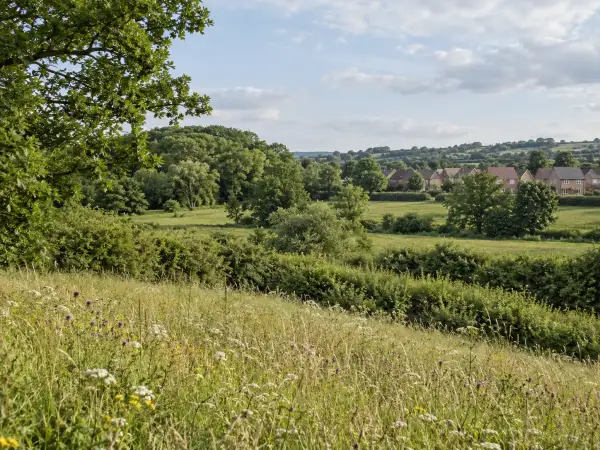
For development subject to mandatory BNG in England, the national minimum is 10%. Exemptions and transitional arrangements apply, so check the current guidance for your proposal.
Local policy, habitat opportunities and submission requirements also need attention. A regional page provides context; your site and planning authority determine the detailed checks.
Even nearby sites can have different habitat features and development proposals. For example, a field edge, mature hedgerow or connected patch of woodland can help frame the questions for an initial ecological review.
Therefore, treat location guidance as a starting point for discussion. Explain which parts of the site may change and which features you hope to retain. This gives your ecologist a clearer picture before reviewing the available evidence.
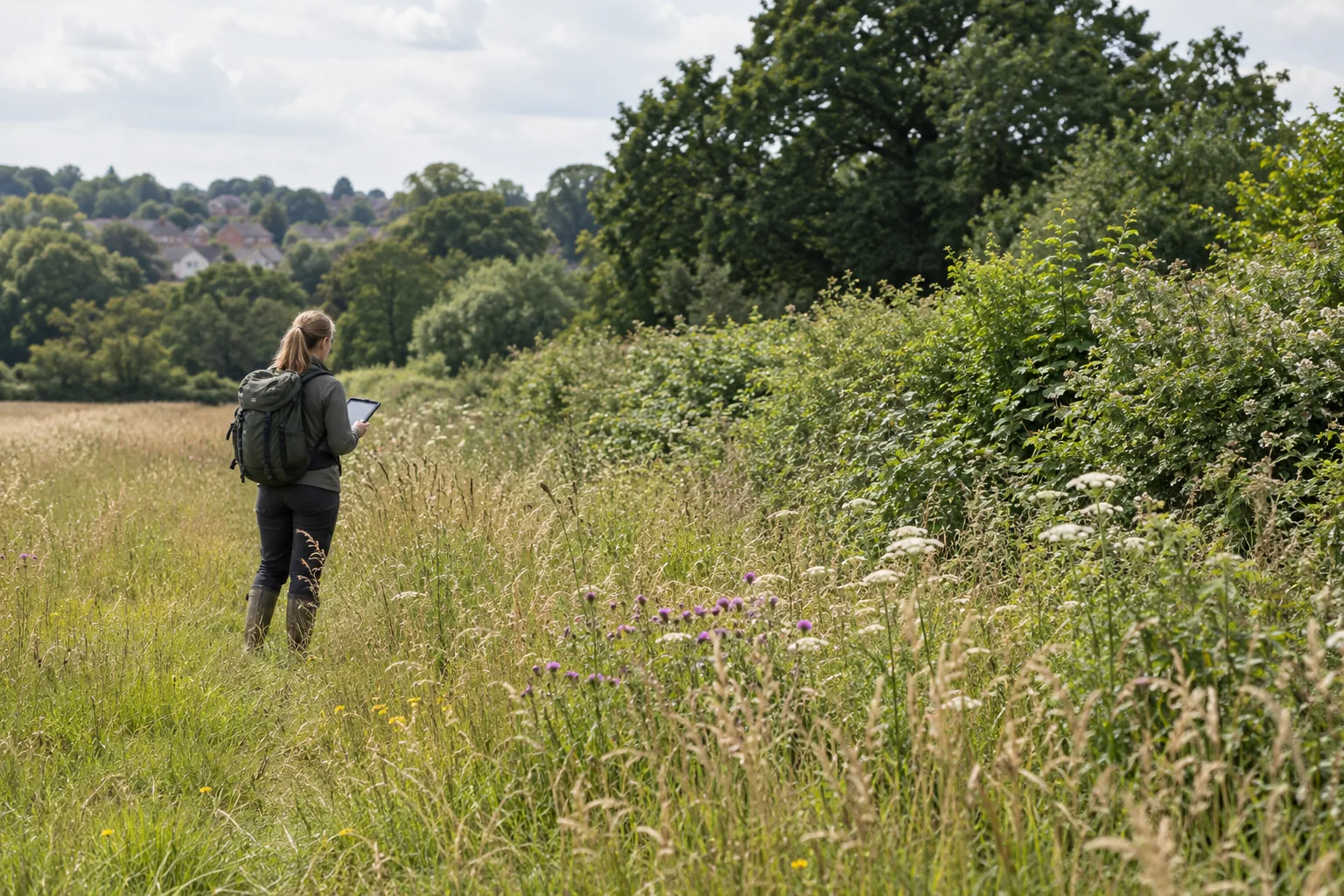
Confirm the site address and responsible planning authority. Then review its adopted policies and validation checklist alongside national guidance. Bring together any existing habitat surveys, metric calculations and planning correspondence so your ecologist can identify gaps.
For initial advice, send us the postcode, proposed development and planning stage. If available, include the planning reference and any ecology information already prepared.
Once you have identified your area, choose the support that matches your next step.
Explore our BNG assessment service for habitat evidence and biodiversity calculations.
Read about Biodiversity Gain Plan support when preparing the information needed for your project’s BNG approval.
Our BNG consultants can help you consider the work your project needs.
Use these answers to choose a starting point and prepare a useful enquiry.
Choose your region if you already know the site location. Otherwise, start with the England guide and then explore the relevant area.
No. It shows simplified English regions for navigation. Confirm the planning authority separately, using the site address and the authority’s published information.
The national framework provides the starting point. However, local policy, habitat priorities and site conditions can affect what you need to consider.
Use the relevant regional page, then send us your site location and planning stage. A missing location page does not determine whether we can assist.
Yes. ACP supports projects across England, from early advice and habitat assessments to Biodiversity Gain Plans. Tell us the site location and scope so we can discuss the support your project needs.
Start with the site address or postcode, a short description of the development and its planning stage. If you have them, include the planning authority, application reference and existing ecology reports. You do not need every document before contacting us.
Use these sources alongside the relevant authority’s current information:
Tell us where your site is, what you are planning and which stage you have reached. We can then discuss the BNG support you may need.
Read our privacy policy for information about how we handle enquiries.
Disclaimer date: September 2026
Disclaimer: This page provides general guidance only. Requirements can vary by project and local planning authority. Please obtain advice specific to your site before relying on this information.